Building date: 1830 south portion, 1840 north 2 story portion.
Original use:
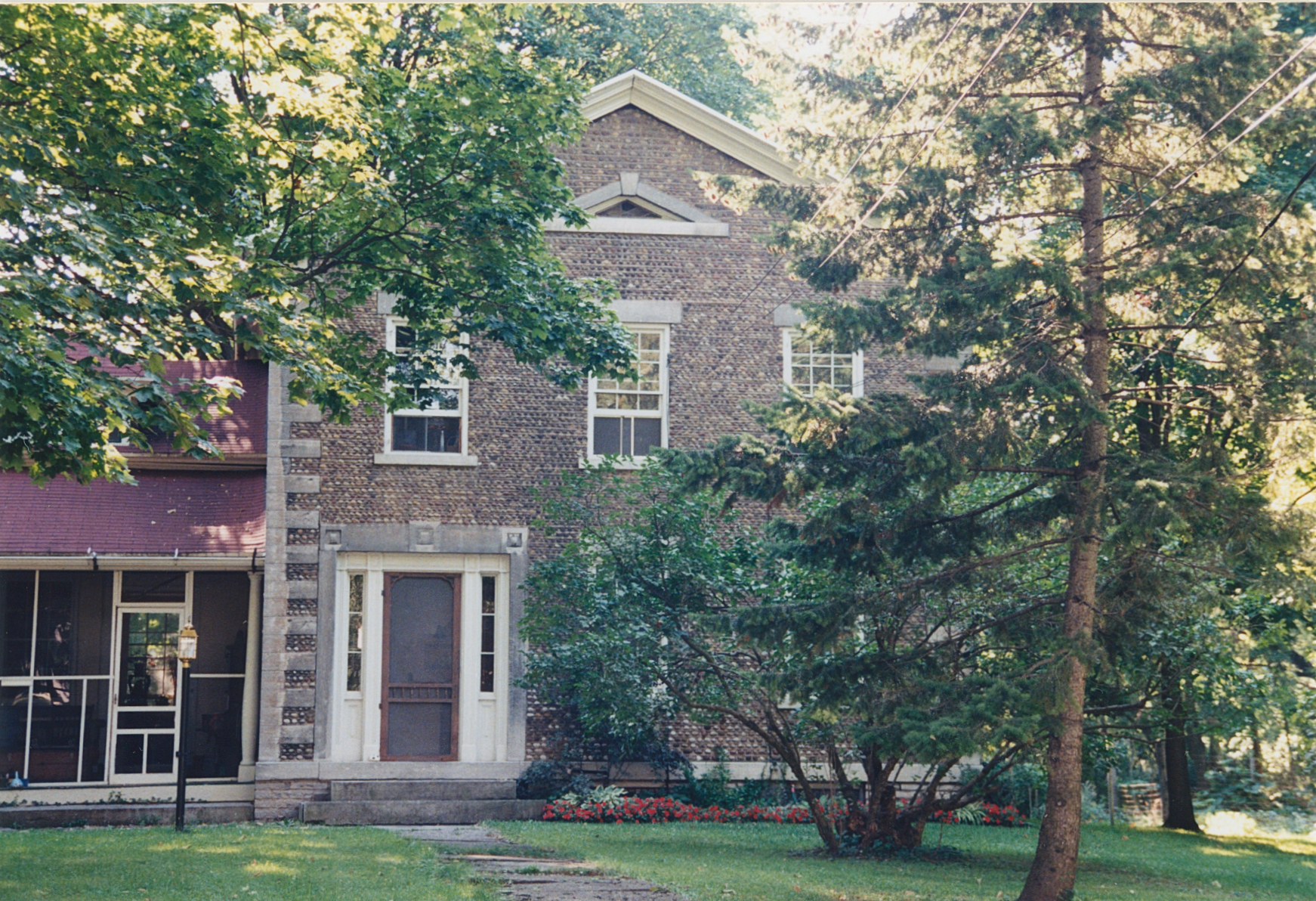
Corner structures: Quoins are made of smooth gray limestone and are elongated horizontally and short vertically. South side has quoins made of gray limestone with chipped surfaces, elongated horizontally, and are variable in height.
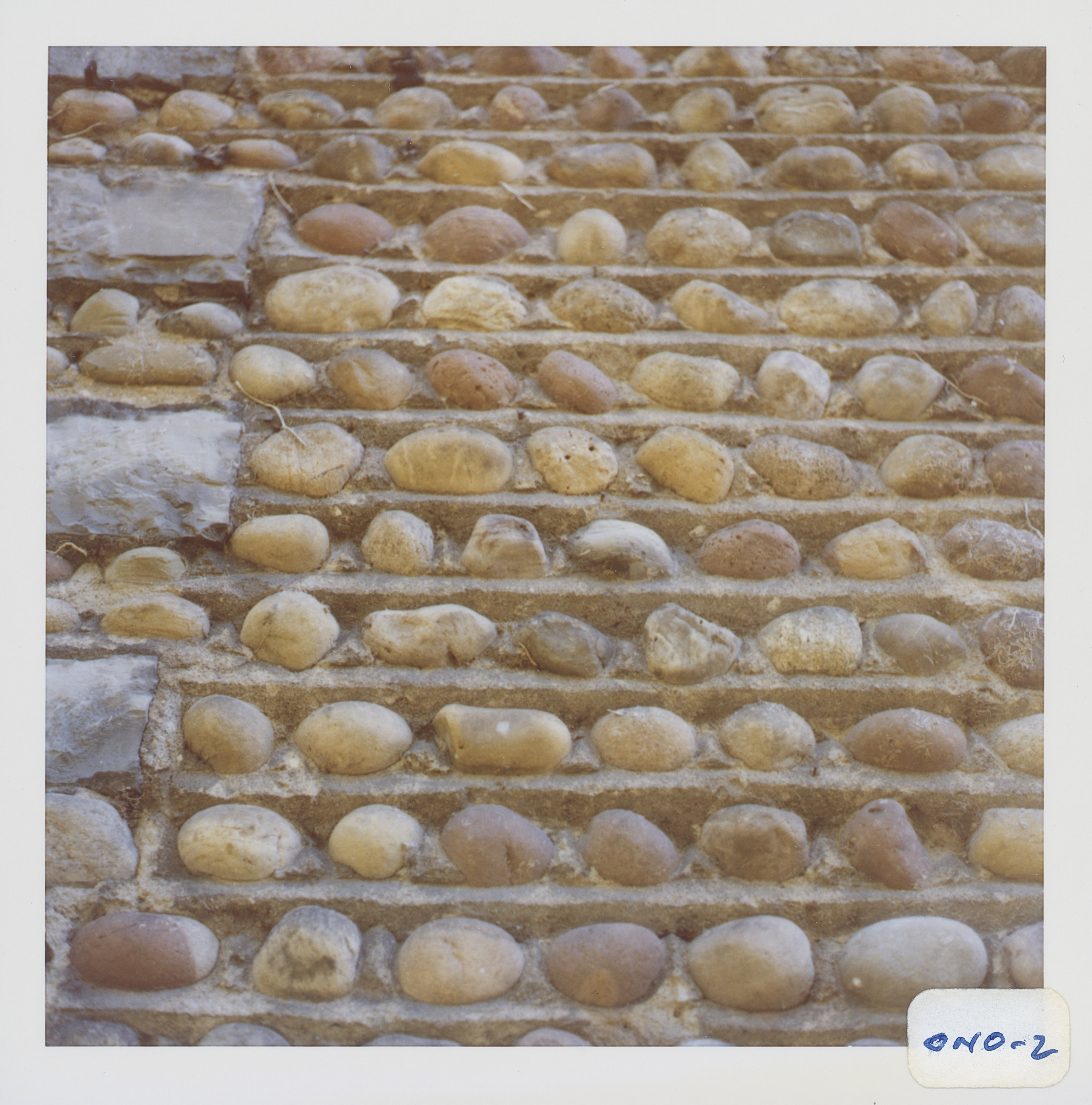
Mortar application and content: Vertical heavy, vertical pyramids
Types and uses of stones: Stones are variable in shape and color and are smoothed and laid in three rows per quoin on the front and bight side wall. On the left or south wall, stones are laid in two rows per quoin. Cobblestones for the house came from surrounding fields.
Types and choice of windows:
Structures with similar masonry details:
Masons who worked on building: Chapman. Built by Oliver Bostwick.
Unique features: Federal / Greek Transitional. Carved Rosettes in limestone door lintle. "Cobblestone Buildings in Onondaga County", 1992, Structure No. 23, compiled by Glenn Hinchey. Editor's Note: The history provided on this structure page agrees that the structure was built in two sections, 1830 and 1840. Glenn Hinchey states there is an 1830 "date on cornerstone by door." None of the imagery on this structure page show that cornerstone; however, the two story section has the 1840 cornerstone on the NE corner, far from the door. Reason suggests then that the south section was built in 1830, with the more prestigious 2 story section being built in 1840, likely when more means, therefore wealth, was available.
Map views courtesy Google Maps. Address is Google Earth confirmed; 42°59'47.49"N 76°09'11.83"W. Current owner of record, Heilmann/Simmonds as of the 2018 Tax Roll.
City of Syracuse and Onondaga County Maps
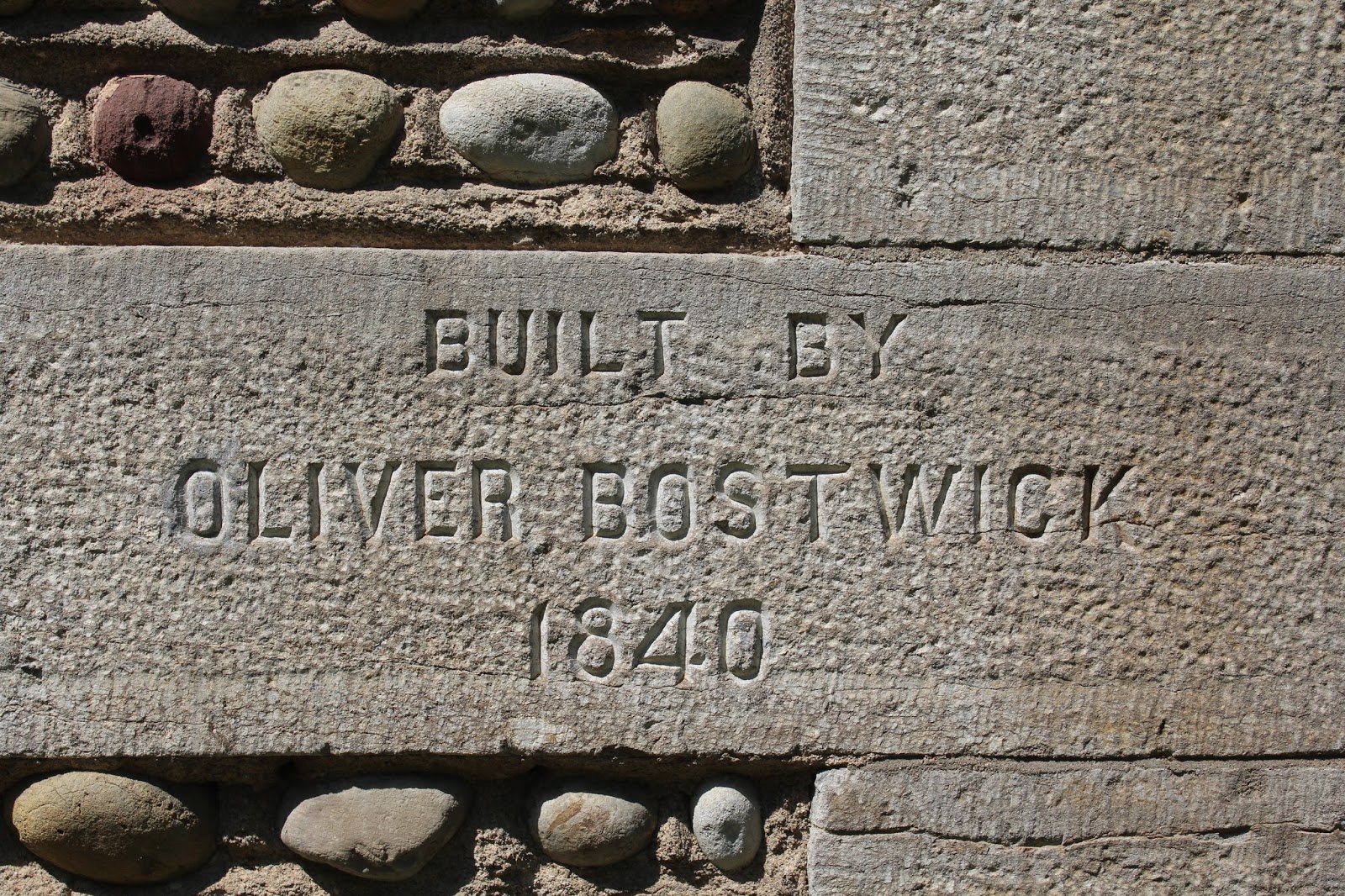
The house at 1942 Valley Drive, Syracuse, was apparently built in two sections. The northern section is two stories with the entrance at the southeast corner. Quoins are made of smooth gray limestone and are elongated horizontally and short vertically. Stones are variable in shape and color and are smoothed and laid in three rows per quoin on the front and right side wall. On the left or south wall, stones are laid in two rows per quoin. A quoin about eye height on the northeast corner is inscribed, "BUILT BY OLIVER BOSTWICK 1840". The vertical mortar between stones is raised in pyramids. The addition on the south side has quoins made of gray limestone with chipped surfaces. The quoins are elongated horizontally, and are variable in height, resulting in a variable number of rows of stones per quoin. Rows vary from one to two per quoin, with no pattern to the variation. Roudabush Survey page 79
The date stone on this house at 1942 Valley Drive, Syracuse, indicates it was built by Oliver Bostwick in 1840. According to family history it was actually built by his son, Nathaniel. The Bostwicks moved here from Otisco in 1830. Oliver, a farmer, was born in Milton, Conn. in 1782 and died in Onondaga Valley on July 12, 1859. He and his wife, Hannah, had nine children. Some sources state the south section of the house was built first. Stone was collected from the surrounding land. Like many cobblestone houses the walls are two feet thick. The slender cornice profile is decidedly Neo-Classical, not Greek. The side wing also features many later add-ons, such as the Colonial Revival dormers, the solarium entrance, and the side-wall bay window. Richard Palmer blog.
Oliver Bostwick moved to Onondaga Valley when the Onondaga Reservation opened up. He bought a portion of "Webster's Mile Square" from the Ephraim Webster estate. While Nathaniel, Oliver's son, did most of the work, the Bostwick family lived in a stone dwelling which is now part of the back of the house.
Working from the plans of an itinerant architect from Ohio, the Bostwick home was begun about 1838 and completed in 1840. A house on Delphi Falls Road near Route 20, is of similar design and construction and is believed to have been designed by the same architect. Cobblestones for the house came from surrounding fields. A foundation was laid of local stone, with a dirt floor and a root cellar, as a base for the house. The walls were two feet thick and there were 20 rooms in the main house. A cornerstone was laid at the right side of the door bearing the construction date.
Building a cobblestone house was challenging as Herbert Rand, a later owner, discovered when there was a moderate earthquake in the Valley during the 1930's. Stones fell from the back of the house. He said he decided to replace them himself. He tried different mortars and spent an entire summer replacing the fallen stones. He found that he could lay no more than three rows at a time, then had to wait for that to set, or all his work would fall down.
The house was built with a kitchen area that included a large fireplace for cooking and heating. A room off the kitchen had no windows and was used as a cold room, with shelves to raise the cream. There were several outer buildings on the property - a chicken coop, a small house later used by Rand as a workshop, and a large barn that still stands behind the house with a later addition to it. There was also once a cobblestone barn between the house and the pond. Since this was a working farm, there were mangers and stanchions for the horses and cattle. The hay to feed them was raised on some of the 100 acres which comprised the property.
The farm passed down in the Bostwick family to Mr. and Mrs. Sanford Clark, the last relatives of the Bostwicks to farm the land. During their ownership the property was maintained with the help of work crews from the Onondaga Reservation. There were working fountains in the yard, which were pumped from the nearby hillside in back. There were also beautiful formal gardens and a trimmed lawn. The farm produced feed for the animals, as well as melons and berries.
When her husband died, Mrs. Clark lived alone in the house until she died in 1922. Then it was purchased by Rand, who taught music at Syracuse University and played with the Syracuse Symphony. He taught violin and viola and Mrs. Rand taught piano. During the summer the Rands would travel with a group that entertained at vacation resorts.
For several years the farm was tended by a tenant farmer who lived in the Ephraim Webster house on the Rand property. Since the house had no running water, the family drew their water from Kimber Brook which ran though the property. After several years the cows belonging to the tenant farmer were found to be tubercular and the herd and that operation came to an end.
During the 1920's, the Rands, like many others, thought that boom times would last forever. Rand planned to subdivide the land no longer being farmed and filed plans for this with the city. Maps were printed with mythical lots on mythical streets. When the Depression struck, Rand was taxed for his mythical development called the "Rand Tract" but was unable to pay. He lost the land to the city, leaving him only the house and about two surrounding acres.
Times were hard so Rand altered the house into three apartments. Sometimes the three families shared a meal when there wasn't enough food for all. Rand had a friend who knew some bootleggers who needed a spot for a really big still and bootlegging operation. The barn seemed ideal, and they cut a hole in the floor and built chimney through the roof. Sometimes they would stoke up the fire until it was so hot flames would come from the roof and the people on the next street would call the fire department. The large still ran for several years without any interference from authorities.
When the bootleggers learned they were going to be raided, they took all the two gallon tins of alcohol and the alcohol with gin flavoring added, (bottled as "Golden Wedding Gin,") and put them in the cellar of the Rand house. When the Treasury agents raided and found only the still they were so angry that they chopped down the still, cow stanchions, mangers and stalls in a fit of rage. When the Depression began to ease, Rand rented the barn to a man who tried to raise riding horses and gave hayrides as a sideline.
Pat Rand Brooks, daughter of Mr. Rand who inherited the house after he died, said that the story of farm machinery winding up at the bottom of Webster Pond and the tale that the pond suddenly appeared overnight, were untrue. She claimed that there had been no farming on that land since 1928 and the water appeared long after that date. The pond was formed when a nearby creek silted up. However, there may have been some equipment used with the horses that was left around and was covered with water. Richard Palmer blog.
Home of Matched Stones Still in Use After Century
Onondaga Valley Dwelling Erected by Oliver Bostwick Weathers Ravages of Time, the Post-Standard, Syracuse N. Y. date unknown, likely circa 1945
A little more than 100 years ago Oliver Bostwick came to Onondaga Valley and on land which had once been owned by Ephraim Webster, one of the first settlers of this section, built a home of matched cobblestone. That house still stands and is tenanted today.
The old stone house, now owned by Herbert B. Rand, is on Valley Drive. Located not far from the old Webster homestead, it is a unique monument the pioneering families which settled this portion of Onondaga county.
The house, itself, is situated on a farm plot in the center of a grove maple trees, one of which was planted at the time the house was built of entirely small cobblestones set in orderly rows one upon the other.
The Bostwick family moved to Onondaga Valley, which was then the community of Onondaga Hollow, from the village of Otisco about 1830. The Bostwick home in Otisco has recently been purchased by one of his descendents with a view to restoring it to its original condition.
Build by Bostwick's Son
Altho the house was financed by Oliver Bostwick, it was built by his son, Nathanial, who supervised the construction and did much of the labor himself.
The task of building a house in those days was much more difficult that now. The greater part of the building material had to be obtained on the grounds and worked into shape by hand.
The west side of Onondaga Valley, however, is full of gravel and cobbles covered by a thin topsoil, therefore it was relatively easy to get stone for the masonry of the building.
The stone was collected from the adjacent land and was gathered in large piles. It was then sorted thru a hole in a plank - the stones which passed thru the hole were used and the others were rejected. It is probable that many tons were used in the construction of the walls.
The wall was laid three courses deep, one course being one row of stones, and placed course upon course to the height of two stories. The stones were laid in mortar from the gray limestone of the surrounding countryside.
Wood Cut on Farm
All the wood was cut on the farm. The floors were made of black ash planking cut by hand and the timbers used to support the house are great hand-hewn beams. All of the wood work such as windows frames and molding was also made by hand and is still in good condition after more than a century.
In 1840 another section was added to the original building and constructed in the same manner with cobbles and mortar. This section was built in a little more pretentious and careful manner than the other, and a cornerstone with the inscription "[Built by] Oliver Bostwick 1840" may still be seen on the right corner of the house.
Nathanial, who built the house, must have inherited his ingenuity from his father from whom the following anecdote has been told.
Stockade Deer Trap
Old Oliver had the idea of using his log stockade for a deer trap. He would sit at the window of his home and when a deer entered the stockade for the salt that had been placed there as bait, he would pull the rope and close the entrance. Through this method he got many deer and disposed of them at quite a profit.
A notation made in Oliver bostwick's diary made not long after the house was built reveals t he interesting fact that butter was 20 cents a pound and split hickory was $5 dollars a cord - it is now more than that: $10. Yes were working at that time for $14 a month and board.
During the period from the building of the house to the time it passed into the hands of the present owner, the world has progressed from the candle, through whale oil, kerosene and gas to electricity as a mode of lighting.
Rand Place, Built in 1830, 'Off the Ground'
By David Wallace, Syracuse Herald-American 11/11/1945
A house of intense interest to Syracusans who have a sense of historic values sits at the end of Valley Dr. - No, 1942 to be exact - and it is the only cobblestone house within the city limits, as this writer, has ascertained by investigation. Editor's Note:
The house, out at the end of a row of frame houses, last on the right, is something picturesque and romantic. It was built in 1830, with a wing added in 1840, and it is something special in the history of Syracuse.
The builder was Nathaniel Bostwick, financed by Oliver, his father. The intrinsic structure is still there.
Its historic interest is that everything in the basic structure came of the immediate grounds. The walls are two feet thick, of picked stones off the lot, laid in order, row on row, based in lime mortar. This was in days before cement was in use. Back of the main structure is a bee house, not now used, and a barn, used by friendly neighbors with 18 horses stabled there for riding over the hills nearby. It is that sort of place.
Herbert Rand is the owner having bought it 25 years ago from two brothers Clark. The Bostwicks had loverly daughters, both they left no male descendants, and the Clarks married into the family, so the inherited the estate. The two-story house has 2 rooms and Mr. Rand rents part of them, occupying only six himself, with his family, but he has perfect respect for what went on before.
I sat with him and his lovely daughter, Mrs. Patricia Bolen before a living room fireplace capable of taking four-foot logs. It is something out of the old order.
Mr. Rand was painting a porch floor when this writer called on him, and it was a good job, too. The walls had been plastered white, but that was the only modern touch.
The original walls of the house are two feet thick. That means little stones carefully picked off the lot, and sieved through a board, that that they would match. Five operations were involved, all hand work, and the men could not have been paid, according to ways of the times, more the $1.50 a day.
Mr. and Mrs. Rand and their widowed daughter now occupy the six rooms mentioned. The daughter's husband was killed in Germany. He was a member of the 36th Squadron, and lost his life flying a P-47.
Everything that went into the building of the house came off the lot, originally a farm of more than 100 acres.
Ephraim Webster was the original owner of all this territory. He was trader who came in from the East, dealing with the Onondagas and others of the Six Nations, before the revolution. Courtesy Cobblestone Museum
Park Talked in Webster's Square Mile
Sponsors Would Make Valley Tract Memorial to Pioneer, the Post-Standard, Syracuse N. Y. date unknown.
Saving what is left of Webster's mile square for a recreation park and golf course, in addition to preservation of an historic landmark, the home of Ephraim Webster, first permanent white settler of Onondaga county, is the purpose of a movement gaining favor thruout the Onondaga Valley section.
The plan has been put before Mayor Hanna, Mayor-elect Marvin, the aldermen and supervisors of the south end and planning, parks and recreation commission, and it is hoped if the incoming administration does not hold too closely to its retrenchment program, provision may be made for acquiring the property.
The movement is backed by the Valley Garden club, the civic organization which has for its purpose doing things for the Valley section, primarily improvement of the park in Seneca turnpike which was once the training grounds for local militia.
Movement Taken Up
The "save Webster's mile square" movement has been taken up by the Parent-Teacher association, and, with the other promoters back of it, there is believed to be hope for success.
James T. Canfield is president of the Valley Garden club, Ambrose M. Amidon is chairman of its civic improvement committee, and Mrs. Earl G. Hammond is president of the Parent-Teacher association.
The plan calls for acquiring the cobblestone house, 1942 Valley drive, which Is the home of Herbert S. nand, and back of which is the Webster house. The cobblestone house was built about 1840 by Oliver Bostwick, Later his eon, Nathaniel Bostwick, lived there, and not long ago the family of Benjamin Clark, who married a granddaughter of Oliver Bostwick.
The Webster house is believed to have been built in 1796, and is thought to be the oldest frame house in the county, earlier houses having been built of logs.
Granted Mile Square
Webster was granted the mile square, 640 acres, by act of the state legislature in recognition of his services in the revolution and in compliance with a request of the Onondage Indians. He disposed of his lands, but the Indians gave him more. He had an Indian wife and later a white wife, several of his descendants now living on the Onondaga reservation. He died at Tuscarora in 1825.
The house in which he lived is in fairly good condition. It is at one side of a lane, along which are two rows of trees, and it is said this marks the east and west trail of the Indians, used by the Cayugas and Senecas when they came to Onondaga for the council tires of the Six Nations.
It is proposed to acquire all undeveloped lands south of Seneca turnpike, including Hopper's glen, taking in the hill and woods along the west side of the valley and as far south as the Onondaga Valley cemetery, with Valley drive its east boundary.
Boulder Only Memorial
Now a boulder with a tablet at the side of the highway is the only memorial to the man who was Onondaga's first settler. After him came Danforth and Tyler. Purchase of 200 acres needed would provide a fitting memorial, promoters of the movement believe.
This would provide space for golf links, tennis courts, baseball diamonds and other recreation places. Kimber brook, which flows thru the property, could be dammed to form an artificial lake for bathing and skating, while springs along the west hillside could be utilized in various ways.
The first suggestion was to acquire the old Webster house, with a few acres around it, and make it a part of the Onondaga creek parkway and boulevard plan, but residents of the Valley proposed the broader plan of acquiring and preserving all that is left of Webster's mile square, in the center of which was his home.
Grave Unmarked
Webster lies in an unmarked grave, far from the home of the Onondagas, by whom he was adopted, and far from the fertile and populous valley which he changed from a wilderness thru urging its settlement and by settling here. Those who urge acquiring what is left of his mile square, preservation of his home and of the natural beauties of the valley and the tree-clad hills that fringe it, feel this the place and this the method for a memorial. Courtesy Cobblestone Museum
Editor's Note: A current and concise article on what became the Rand Tract can be viewed at the CNY Hiking page https://cnyhiking.com/RandTract.htm.
Syr-1 Permanent File of cobblestone Structures, pages 1 and 2. Courtesy Cobblestone Museum
- "The Era of Cobblestone Architecture", unpublished manuscript 1972. To access the manuscript content about this structure, see 59. Onondaga County, Bostwick-Brooks House. This structure is not included in the subsequent book "Cobblestone Landmarks of New York State", 1978.
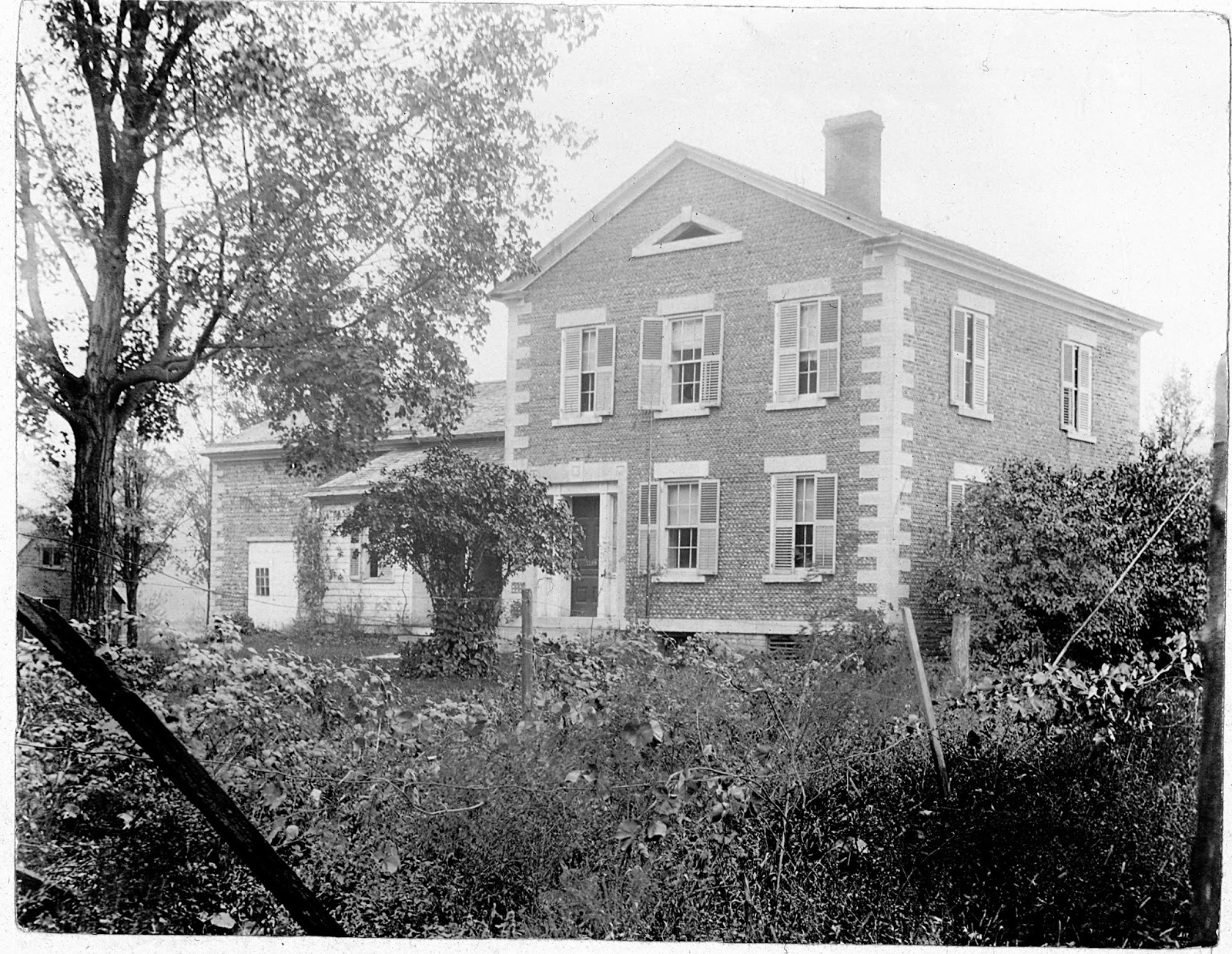 Bostwick house.jpg ¹ The Bostwick house in the 19th century. Cobblestone barn at left now gone. | 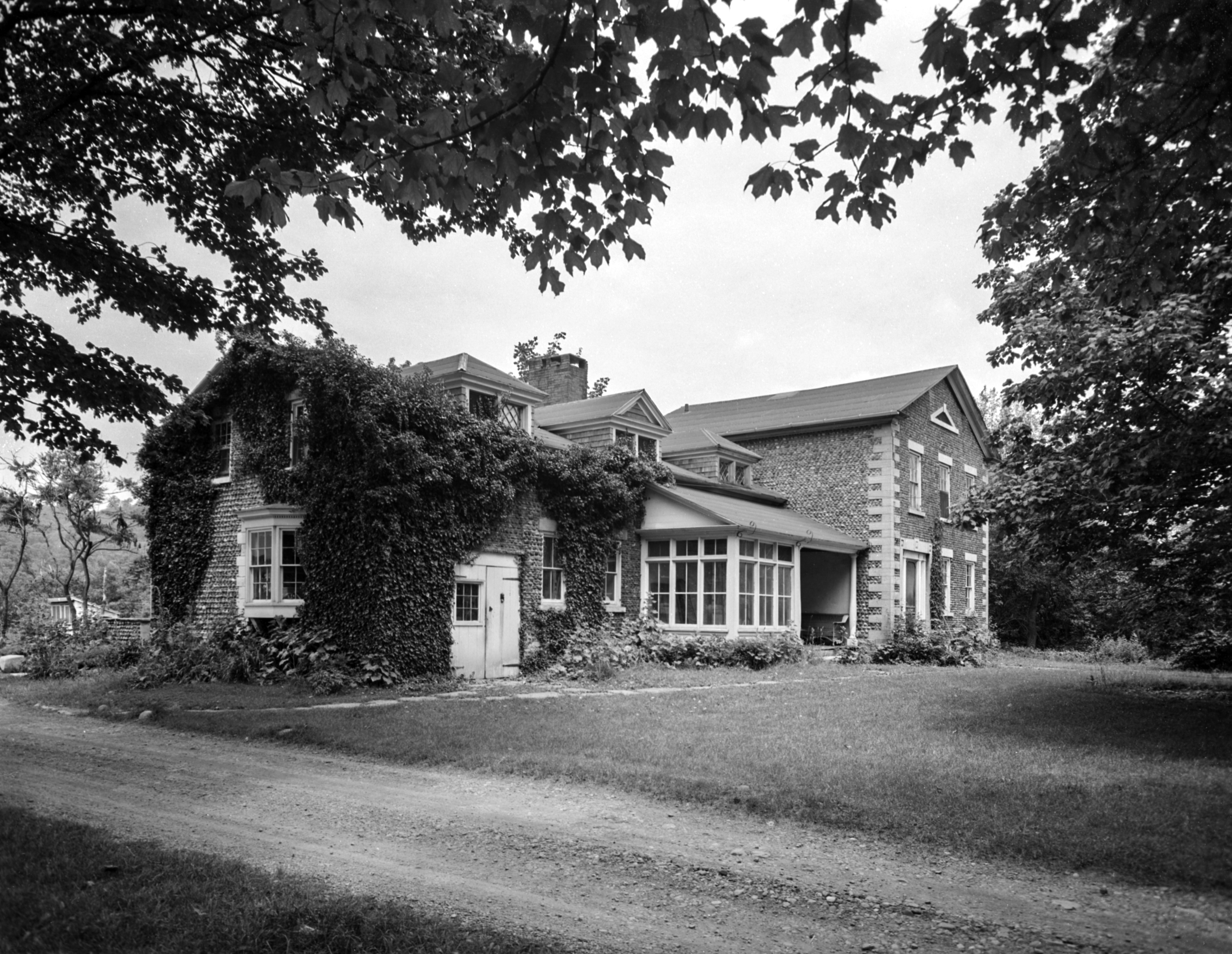 GP Onondaga Syracuse Syr-1 1_1 N.jpg ² 1971 | 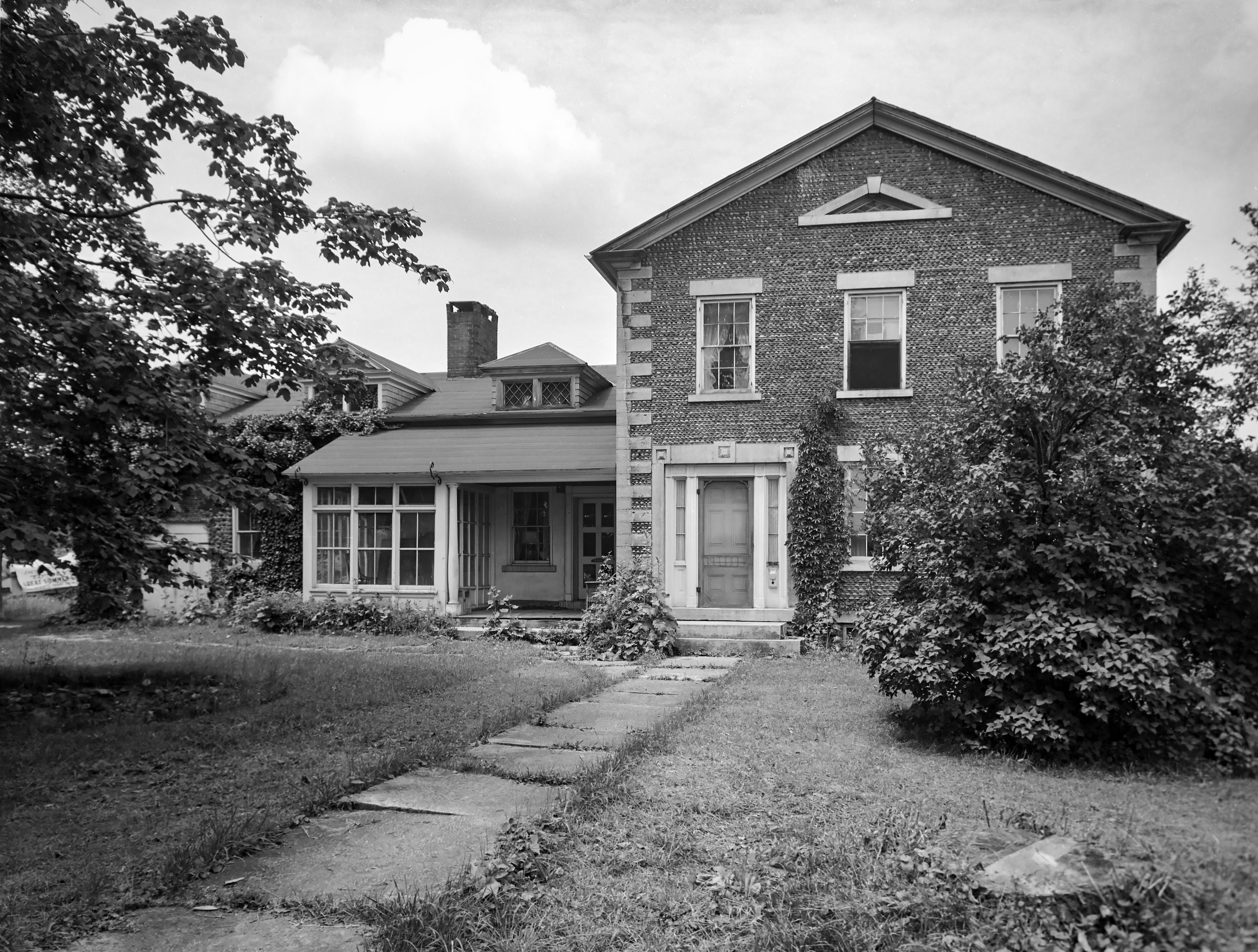 GP Onondaga Syracuse Syr-1 2_1 N.jpg ² 1971 | 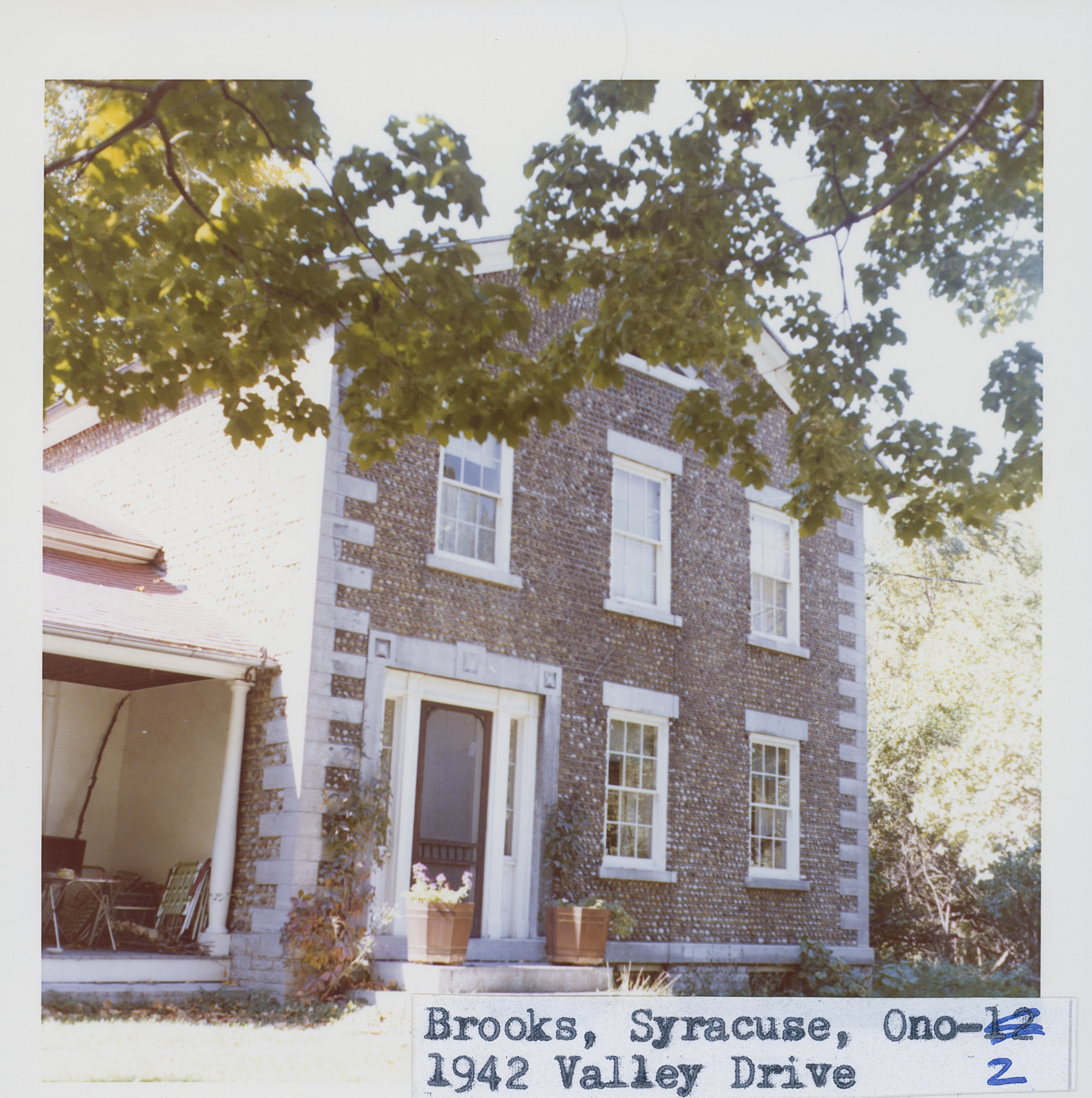 Syr_1_1.jpg |
 Syr_1_2.jpg | 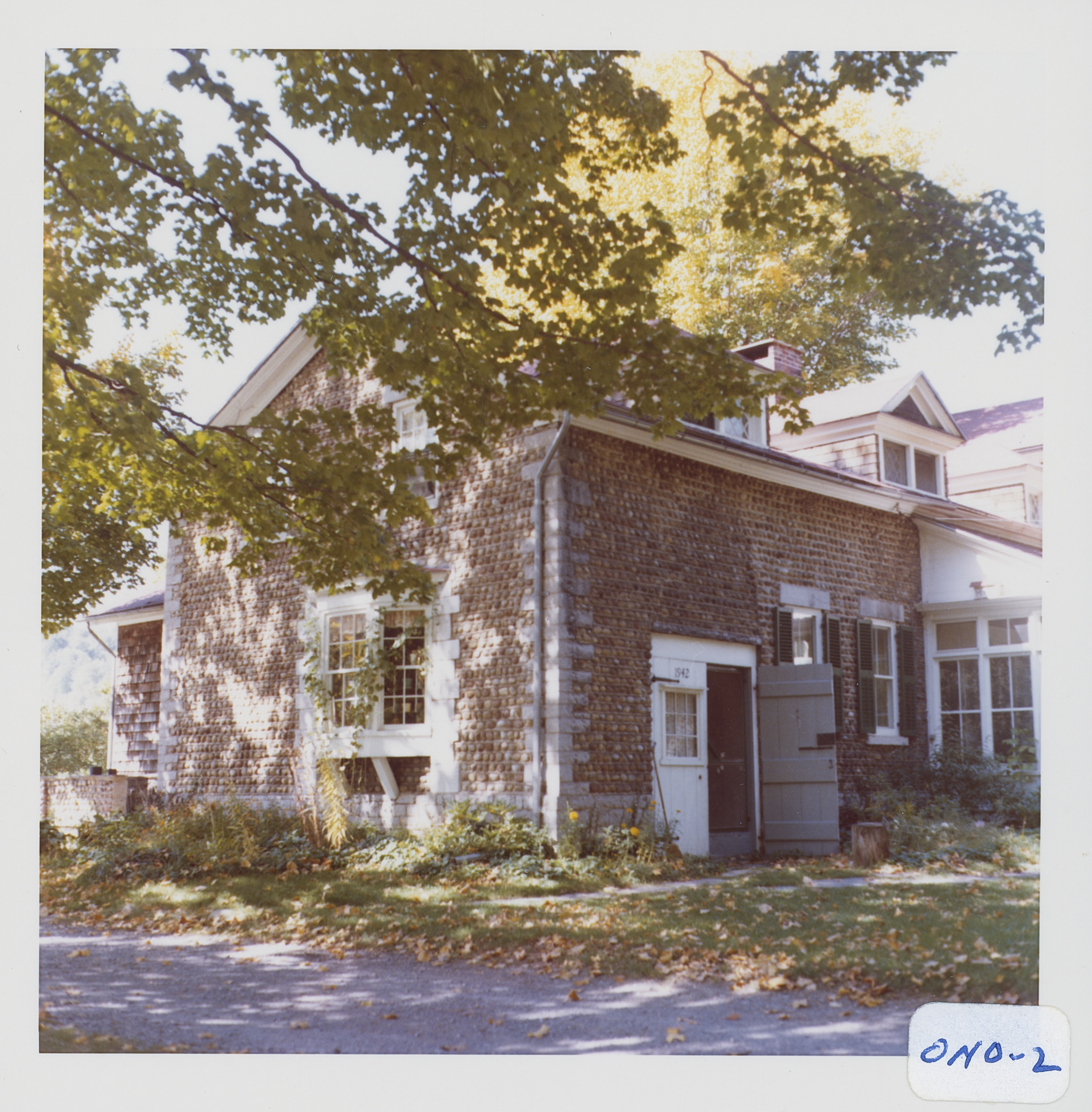 Syr_1_3.jpg |  Syr_1_4.jpg | 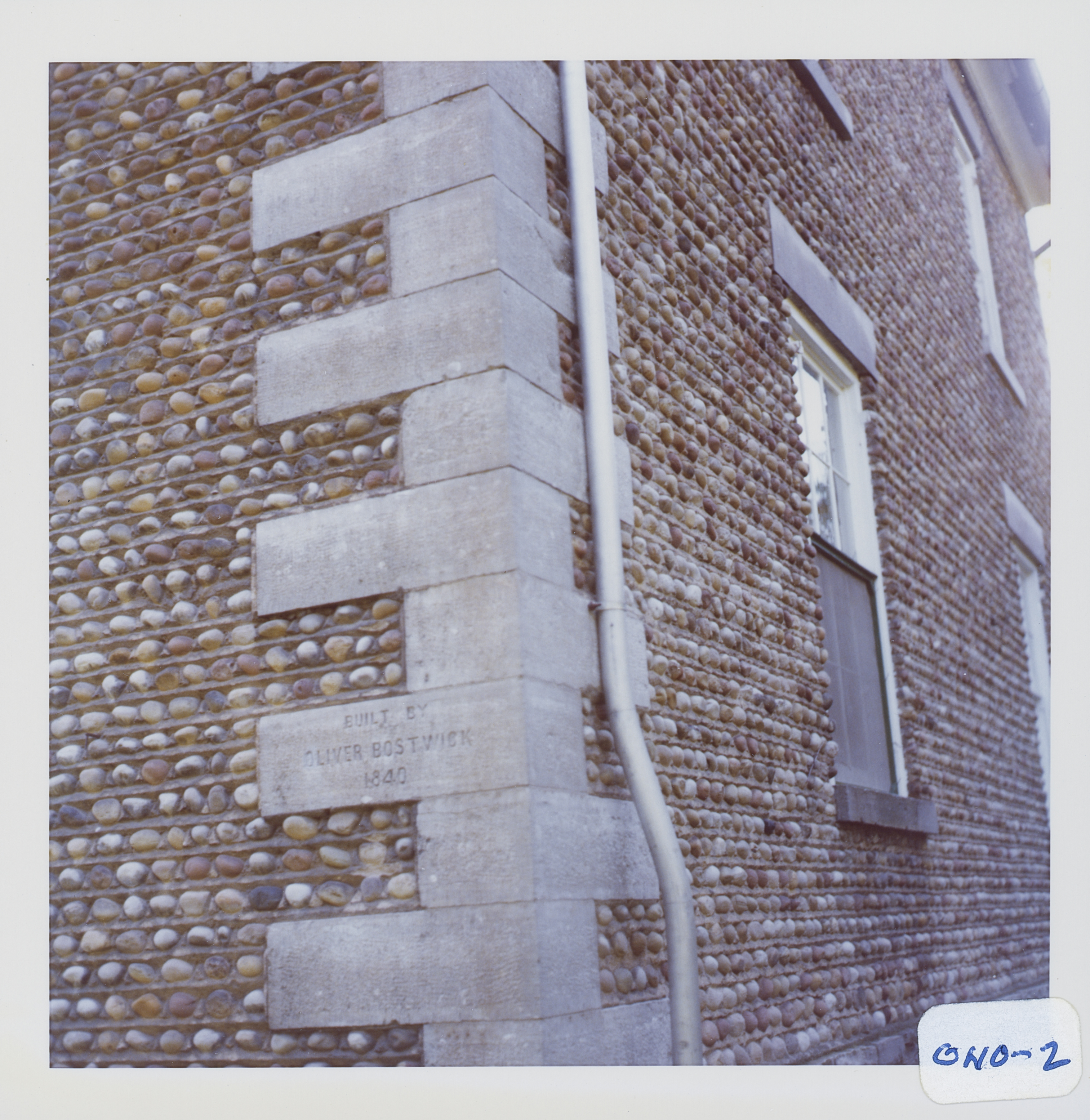 Syr_1_5.jpg |
 Syr_1_6.jpg |  Syr_1_7.jpg | 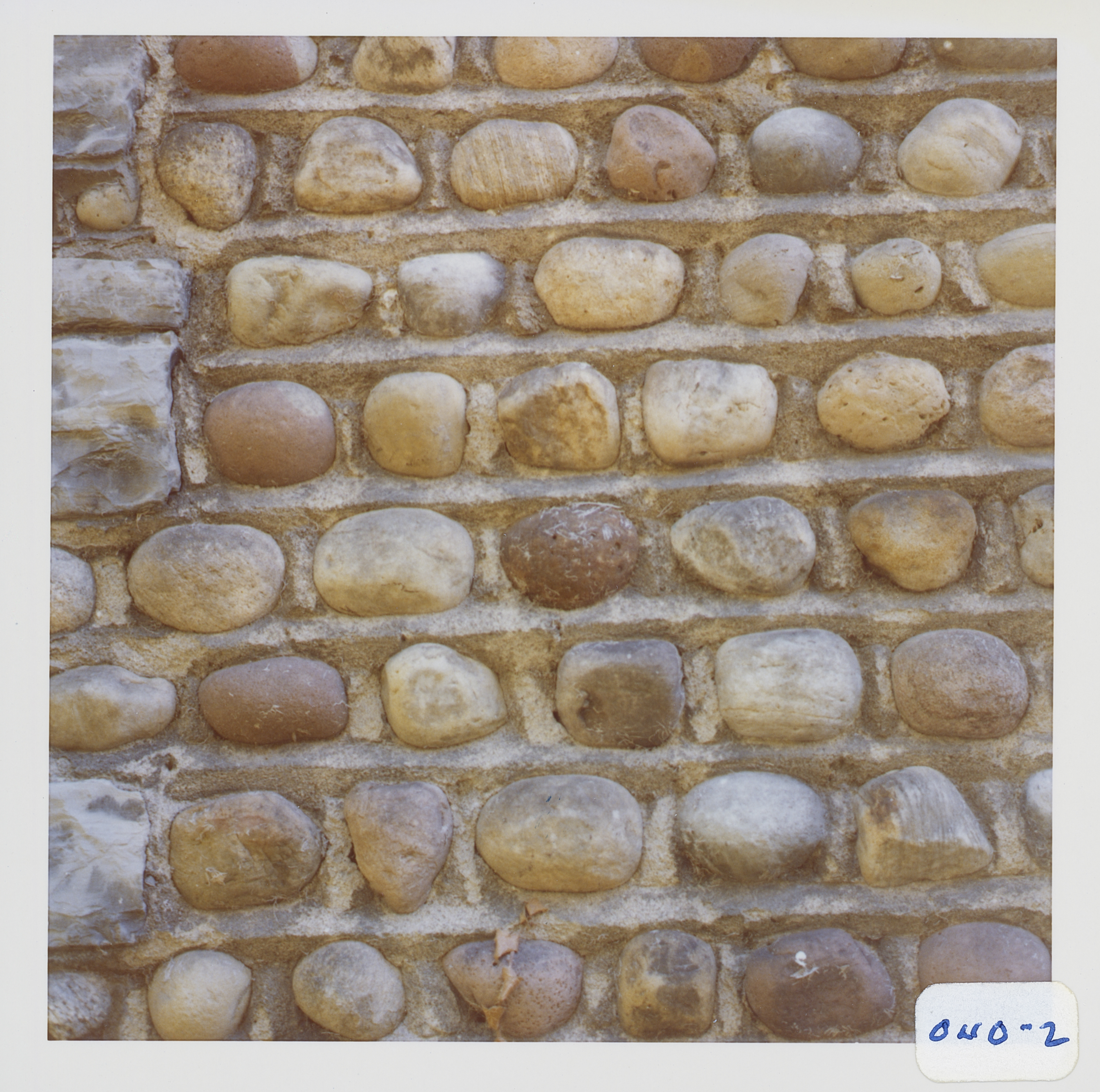 Syr_1_8.jpg | 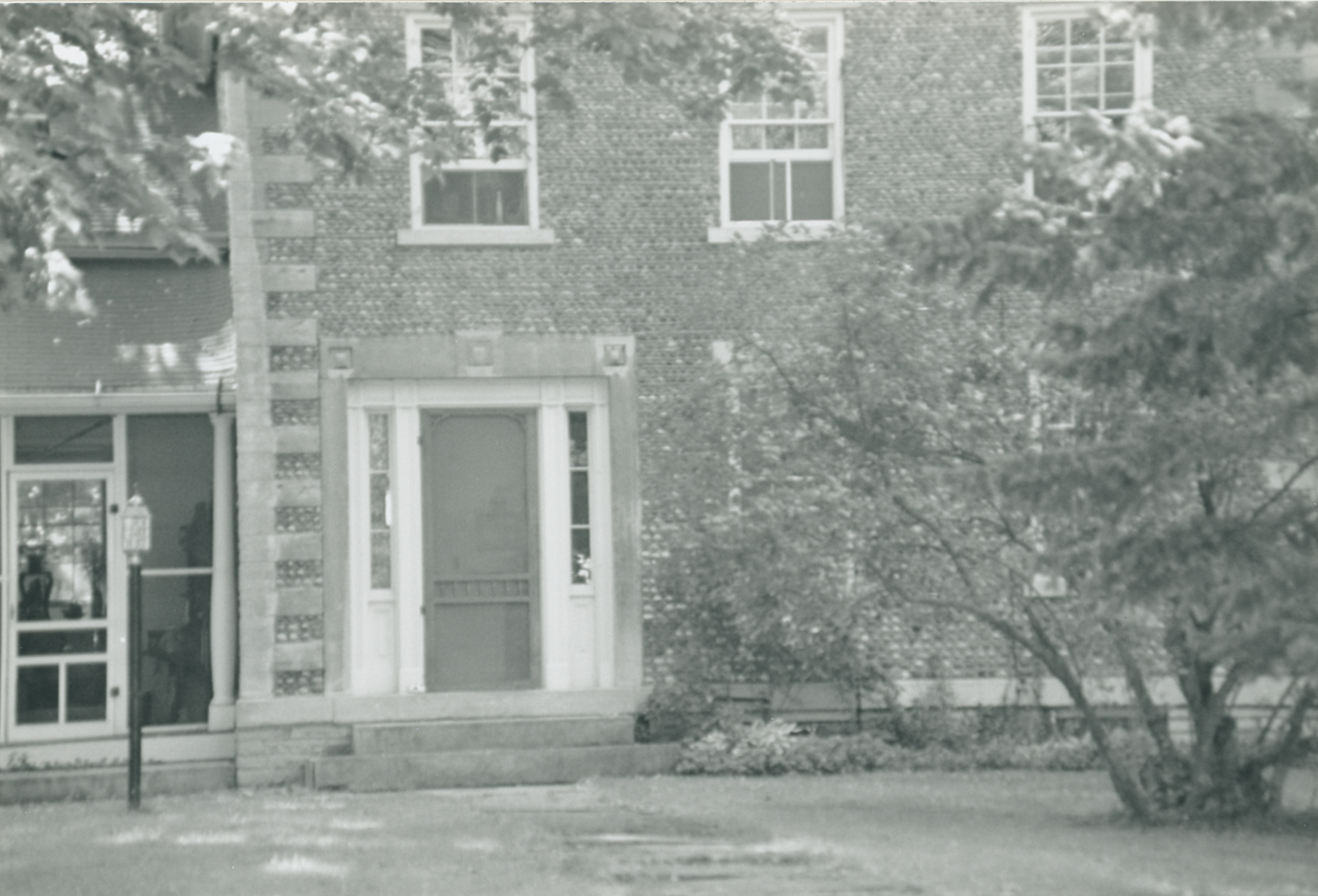 Syr-1 1942 Valley Dr 1.jpg ³ |
 Syr-1 1942 Valley Dr 2.jpg ³ | 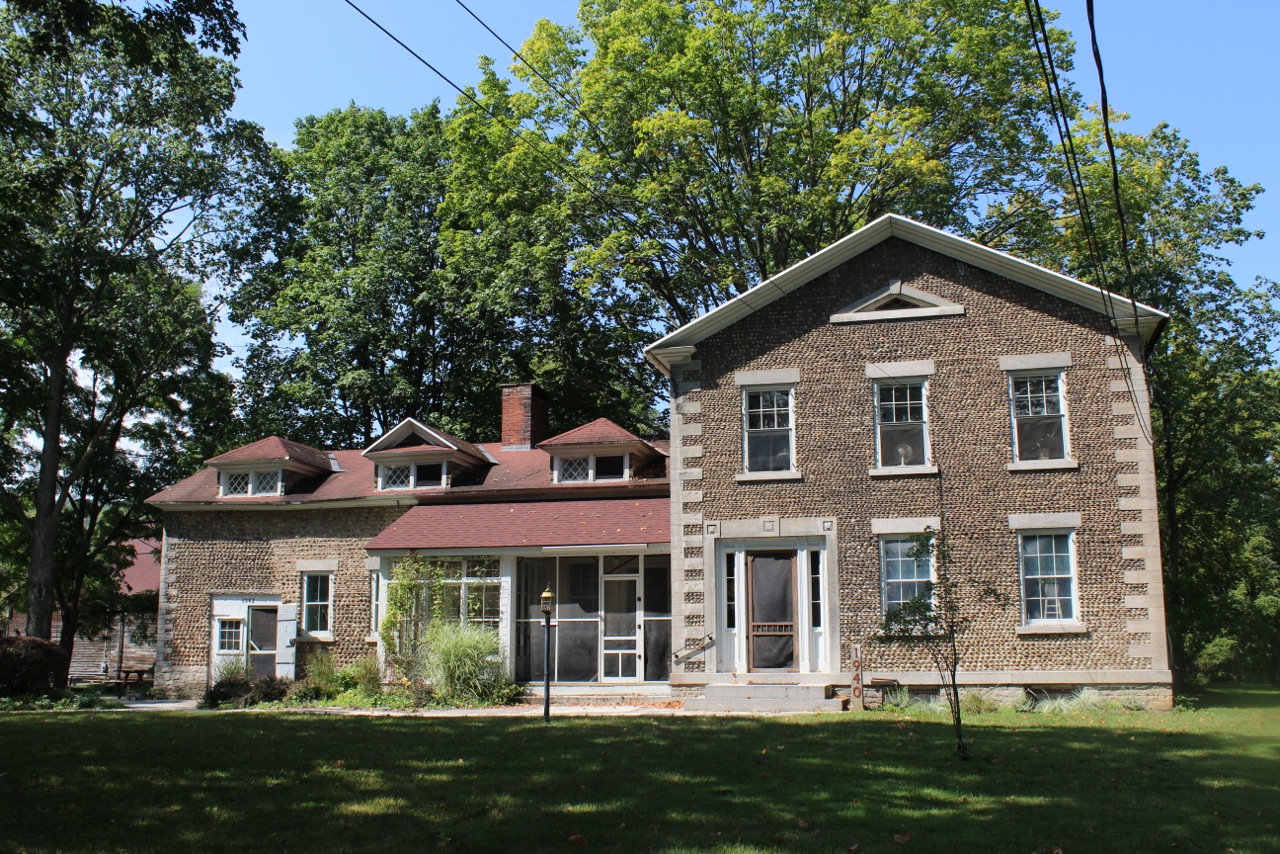 IMG_1824.jpg 4 | 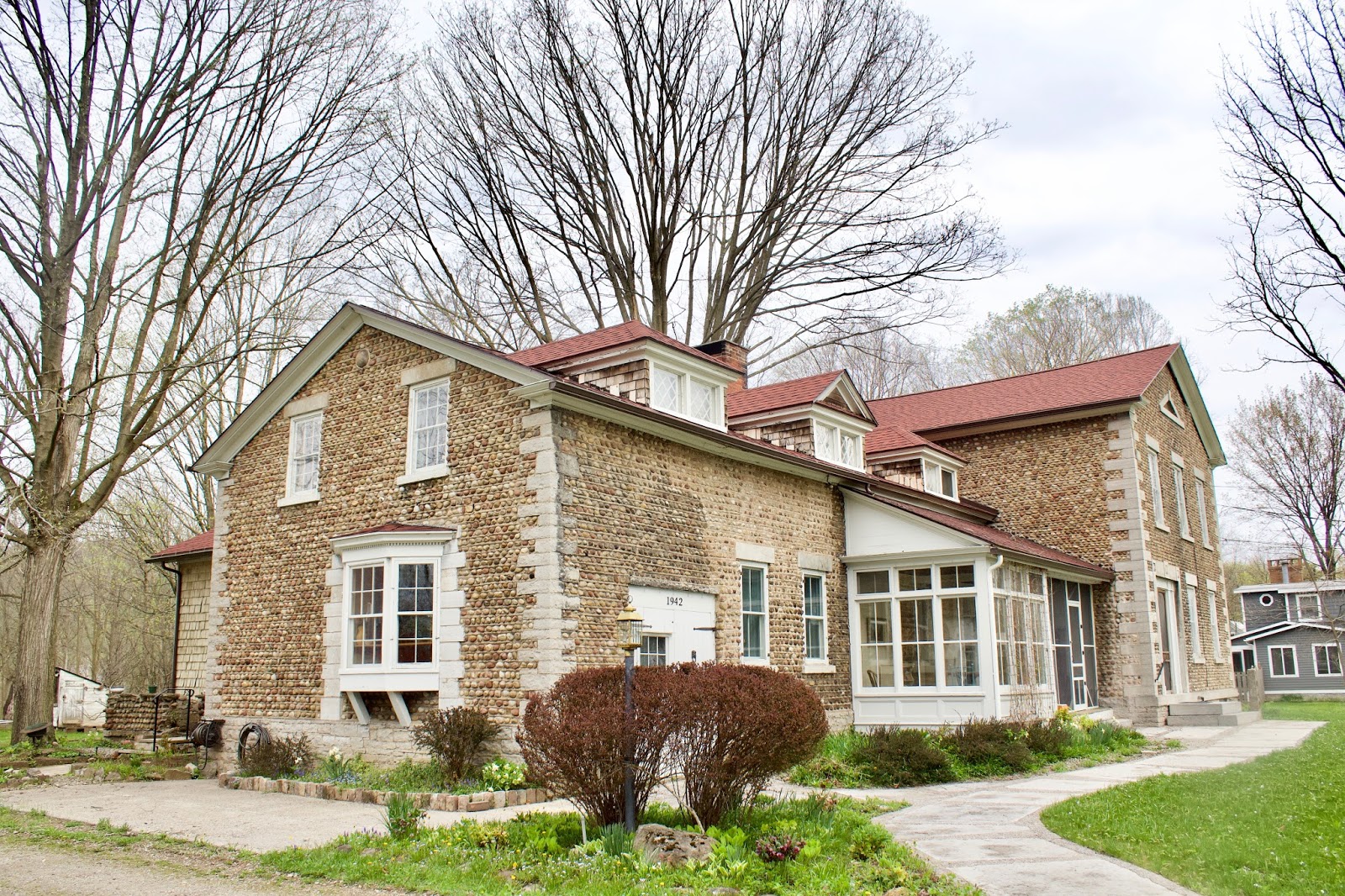 1942 Valley Drive 3.jpg 4 | 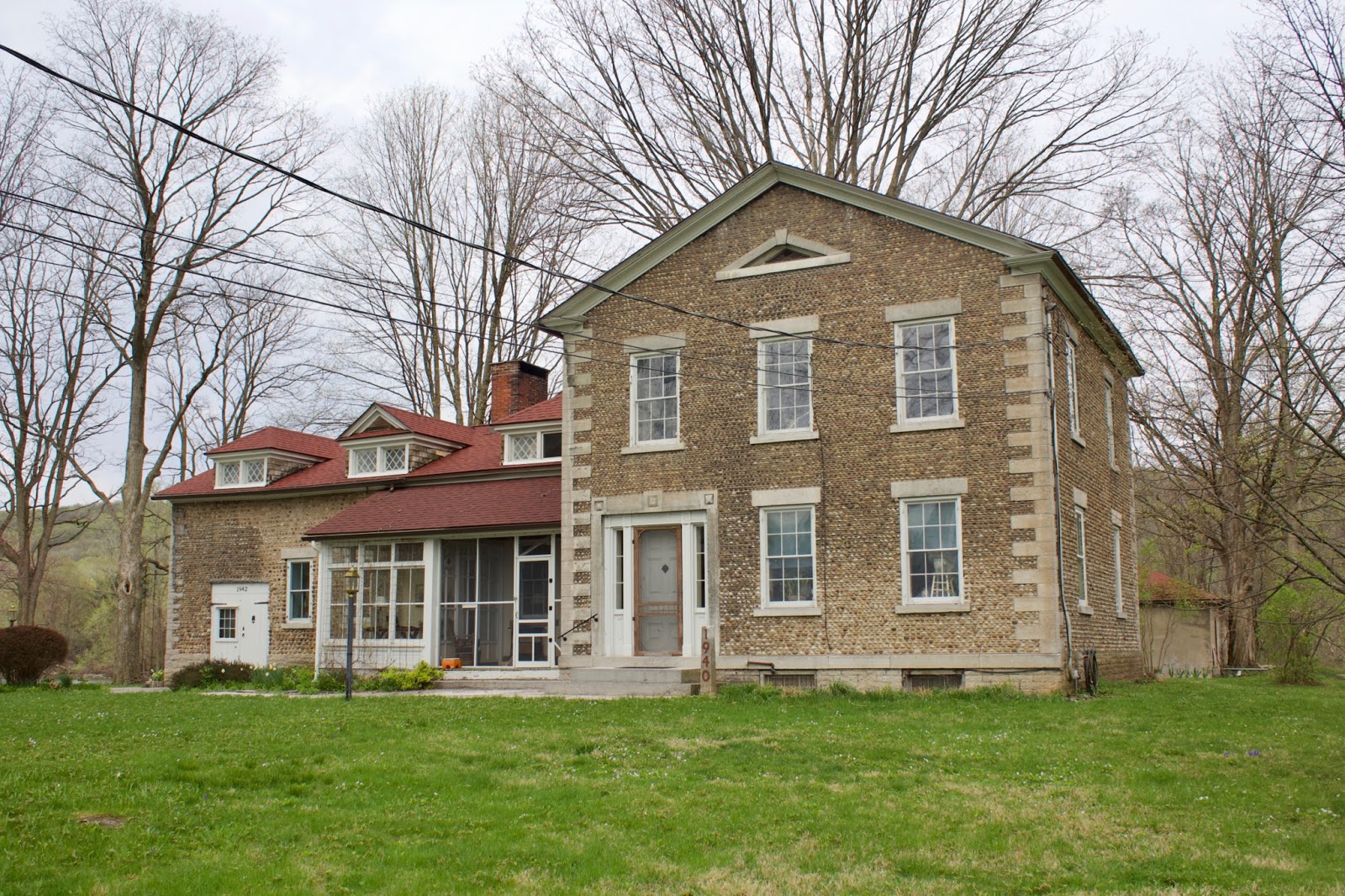 1942 Valley Drive.jpg 4 |
 Bostwick date stone.jpg 4 Date stone near right corner Bostwick house. | 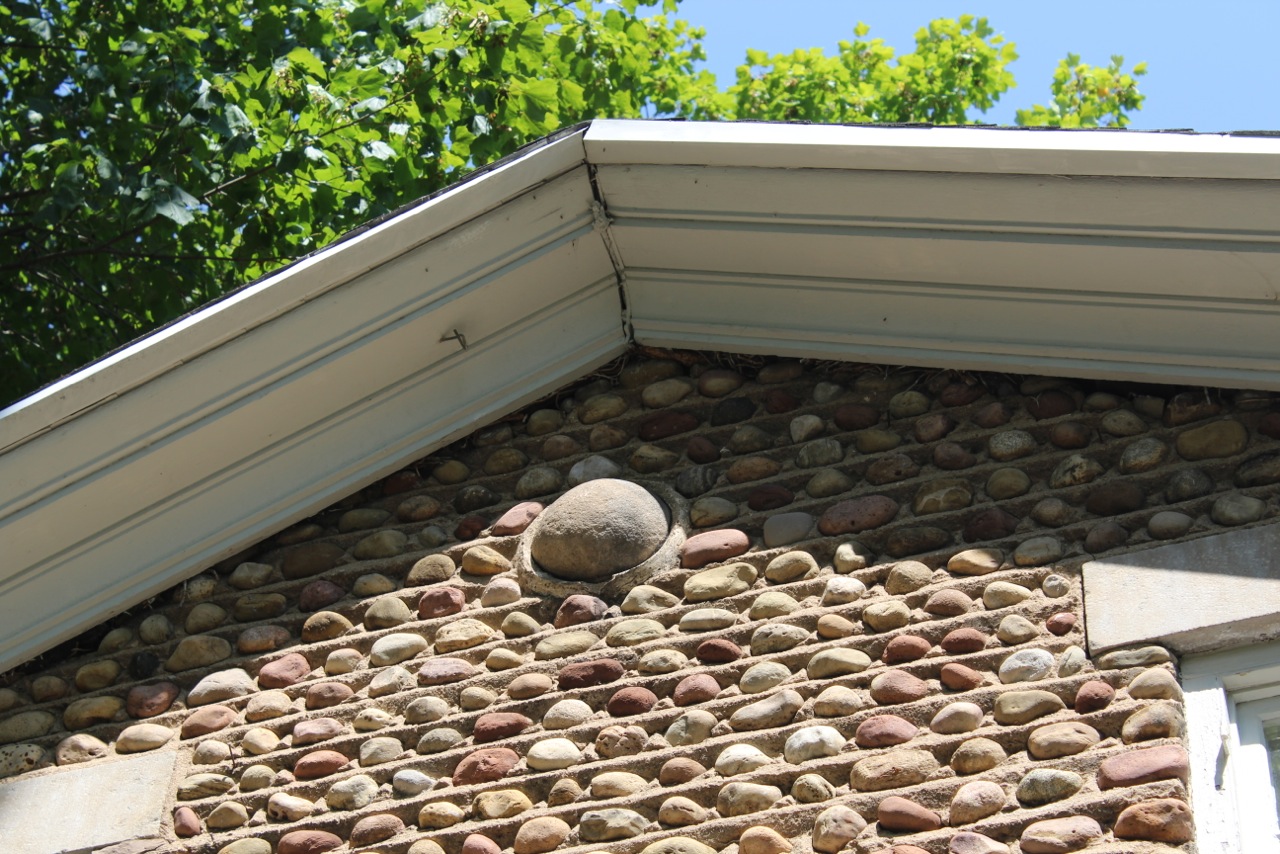 IMG_1835.jpg 4 | 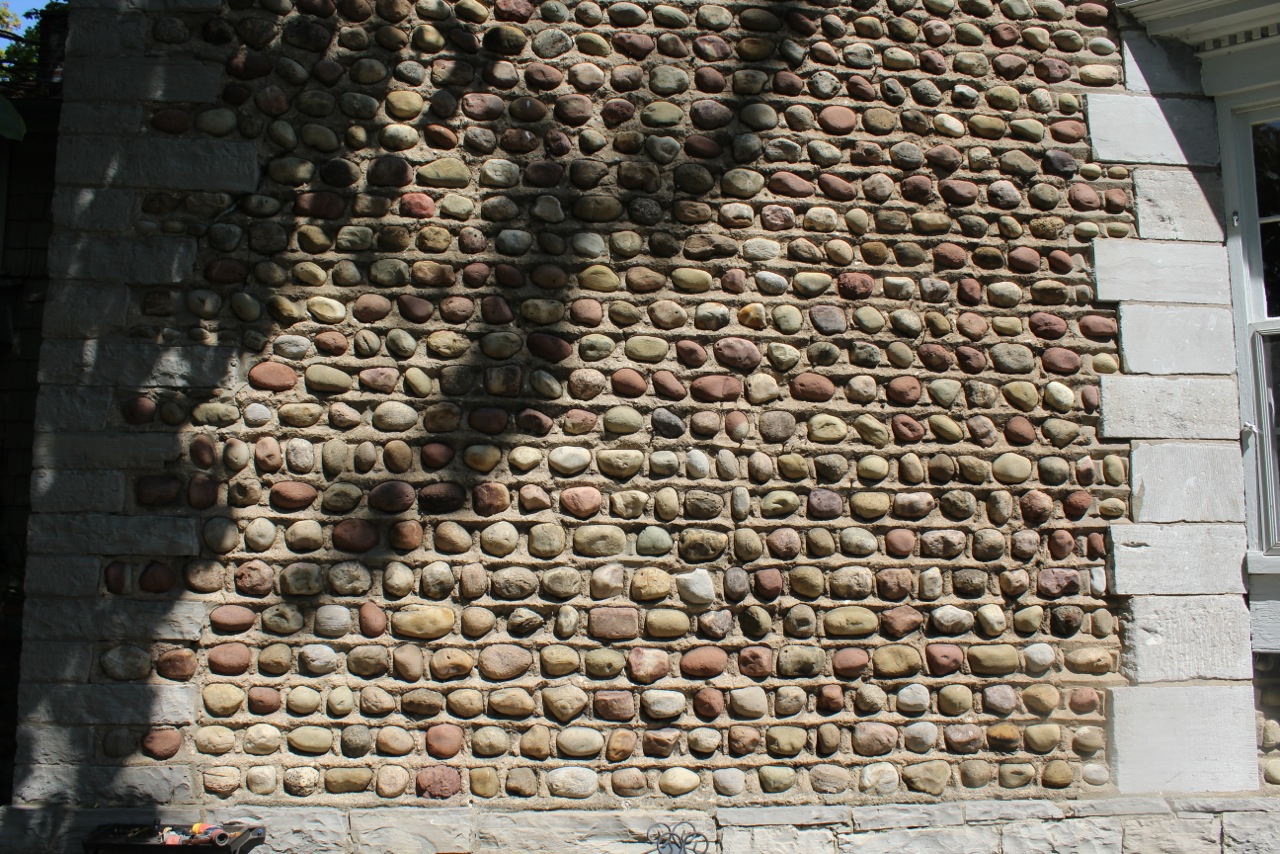 IMG_1833.jpg 4 | 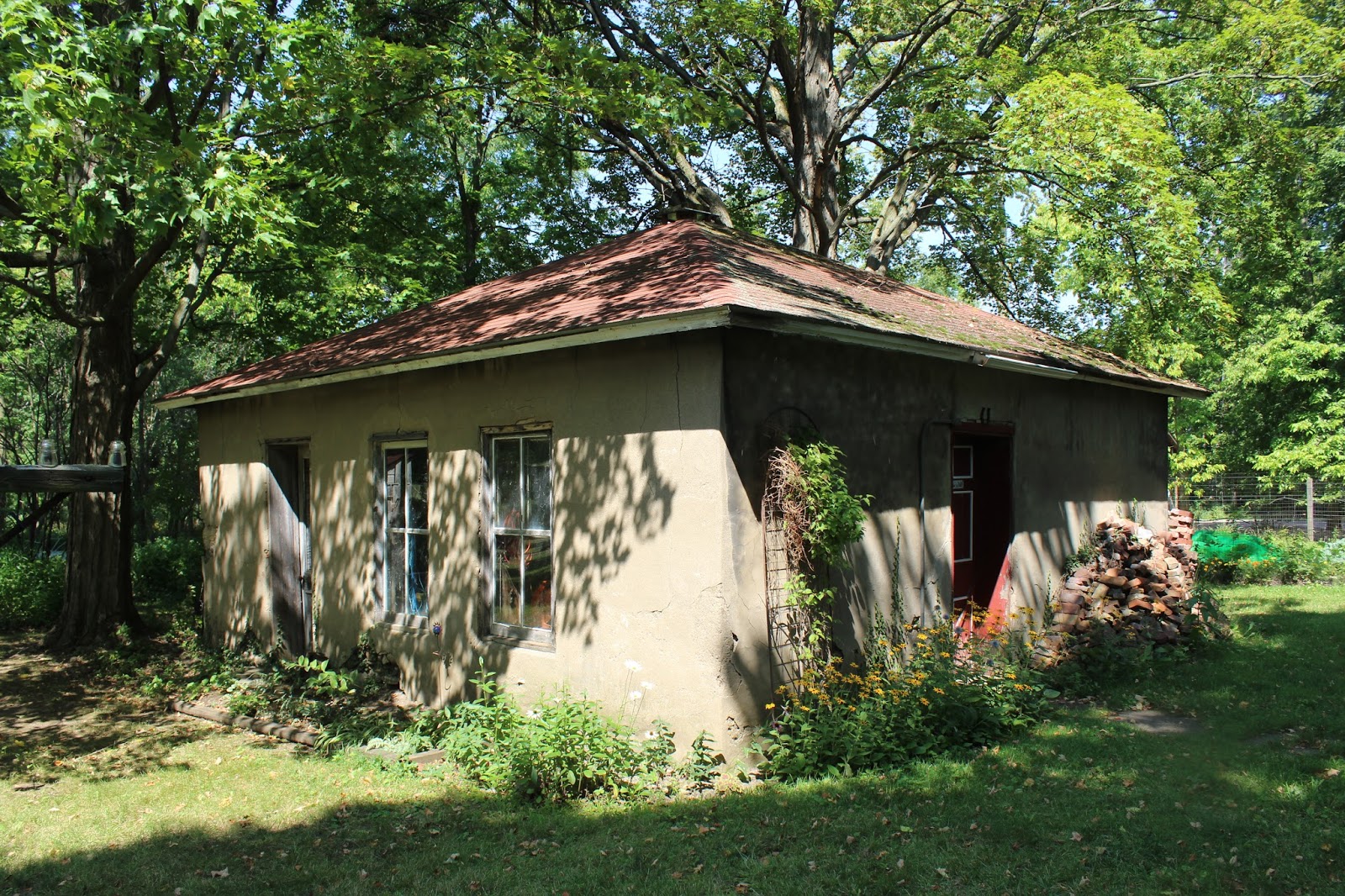 1942 Valley Drive workshop.jpg 4, 5 |
¹ Image courtesy Onondaga Historical Association, Richard Palmer blog.
² Photography courtesy Gerda Peterich. Cobblestone Museum.
³ Photography courtesy Martin and Sheila Wolfish.
4 Photography courtesy Richard Palmer.
4 The stuccoed cobblestone workshop at rear was once used as a bee house with hives inside. Later it was Herbert Rand's workshop where he built grandfather clocks.
